5 Best AI Tools for Academic Integrity and Plagiarism Checking
Ensure your work is original with these 5 best AI tools for checking plagiarism and maintaining academic integrity.
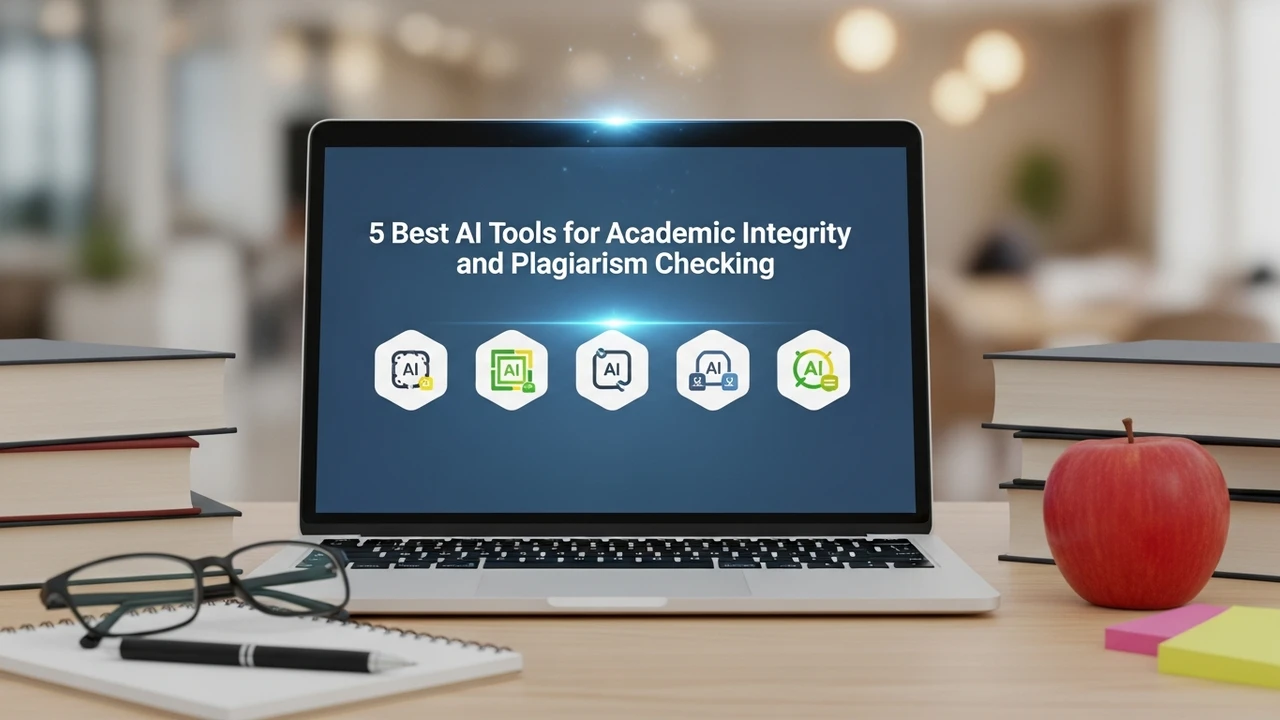
5 Best AI Tools for Academic Integrity and Plagiarism Checking
Ensure your work is original with these 5 best AI tools for checking plagiarism and maintaining academic integrity.
Hey there! If you are a student or a researcher, you know the drill. You spend hours, maybe days, pouring your heart into an essay or a thesis, only to be hit with that nagging anxiety: Did I accidentally copy someone else's phrasing? Is my citation style perfect? In the age of AI, academic integrity has become more complex than ever. It is not just about avoiding copy-paste plagiarism anymore; it is about ensuring your voice remains authentic while using modern tools responsibly. Let’s dive into the best AI-powered tools that help you keep your academic record spotless.
Understanding AI Plagiarism Detection and Academic Integrity Tools
Academic integrity is the bedrock of your educational journey. When we talk about AI tools for plagiarism, we are looking at software that does more than just match text strings. Modern tools use sophisticated algorithms to detect paraphrasing, structural similarities, and even AI-generated content. Whether you are a high schooler or a PhD candidate, these tools act as your final safety net before you hit that submit button.
Top 5 AI Tools for Plagiarism Checking and Academic Integrity
Choosing the right tool depends on your specific needs—whether you need deep research database access or quick AI-detection capabilities. Here are the top contenders.
1 Turnitin The Gold Standard for Academic Institutions
Turnitin is the name everyone knows. It is the industry leader for a reason. It compares your work against a massive database of academic journals, student papers, and internet content. Its new AI writing detection feature is specifically designed to flag content generated by LLMs. It is usually provided through your university, so check your student portal first.
2 Grammarly Premium for Advanced Plagiarism Detection
Grammarly is not just for grammar. Its premium version includes a robust plagiarism checker that scans billions of web pages and ProQuest databases. It is incredibly user-friendly and provides real-time feedback. It is perfect for students who want to polish their writing and ensure originality simultaneously. Pricing starts around $12 per month for annual plans.
3 Scribbr The Best for Thesis and Dissertation Students
Scribbr partners with Turnitin to provide a high-end plagiarism checking service for individual students. If your school doesn't provide Turnitin, this is your best bet. It is highly accurate and provides a detailed report that highlights exactly where your text matches other sources. It is a pay-per-document service, usually costing around $20 to $40 depending on the length of your paper.
4 Copyleaks for AI Content Detection and Originality
Copyleaks has made a name for itself by being one of the most accurate AI-content detectors on the market. It doesn't just look for plagiarism; it analyzes the 'human' nature of the writing. It is excellent for students who want to ensure their AI-assisted drafts don't cross the line into academic dishonesty. They offer a free trial, with subscription plans starting at $9.99 per month.
5 Quetext for Deep Search and Citation Assistance
Quetext uses 'DeepSearch' technology to find matches that other tools might miss. It is particularly good at identifying 'patchwriting'—where you change a few words but keep the original structure. It is very affordable, with plans starting at $9.99 per month, making it a great choice for budget-conscious students.
Comparing Features and Use Cases for Academic Tools
When you look at these tools side-by-side, the differences become clear. Turnitin is built for institutional scale, while Scribbr is built for the individual researcher. Grammarly is an all-in-one writing assistant, whereas Copyleaks is a specialized detector. If you are writing a short essay, Grammarly might be enough. If you are submitting a 100-page dissertation, you definitely want the deep-dive capabilities of Scribbr or Turnitin.
How to Use AI Tools Responsibly in Your Studies
Using these tools doesn't mean you are 'cheating'—it means you are being diligent. The best way to use them is to run your draft through the checker *before* you finalize it. Look at the report, see where the tool flags potential issues, and then go back to your source material to rewrite those sections in your own words. Always remember that these tools are meant to support your learning, not replace your critical thinking. Keep your citations clear, your sources verified, and your academic integrity intact, and you will be just fine.
:max_bytes(150000):strip_icc()/277019-baked-pork-chops-with-cream-of-mushroom-soup-DDMFS-beauty-4x3-BG-7505-5762b731cf30447d9cbbbbbf387beafa.jpg)