5 Best AI Tools for Market Research and Trend Analysis
Stay ahead of the competition with these 5 best AI tools for tracking market trends and consumer behavior.
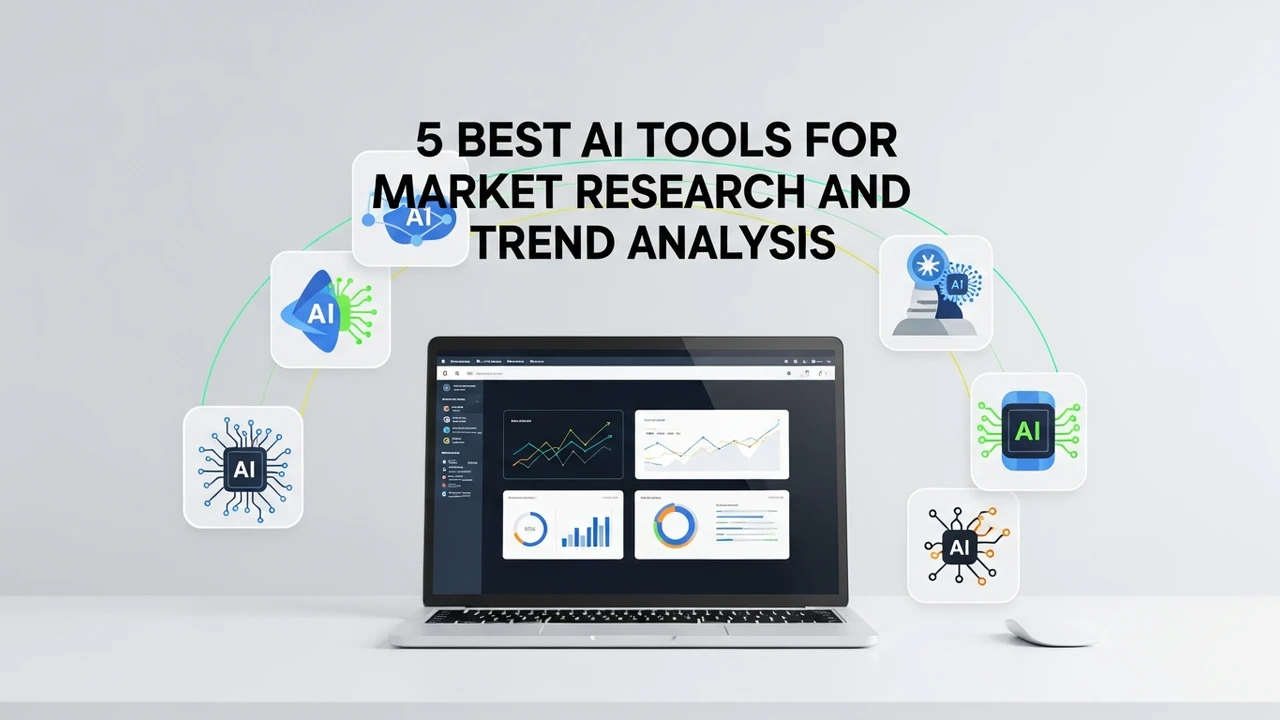
Stay ahead of the competition with these 5 best AI tools for tracking market trends and consumer behavior.
5 Best AI Tools for Market Research and Trend Analysis
If you have ever felt like you are constantly playing catch-up in the fast-paced world of business, you are not alone. Market research used to mean spending weeks digging through spreadsheets, conducting manual surveys, and hoping your intuition was right. Today, AI has completely flipped the script. You can now tap into real-time data, predict consumer shifts before they happen, and understand exactly what your audience wants before they even search for it. Let’s dive into the best tools that are making this possible.
AI Tools for Consumer Behavior Analysis and Market Insights
Understanding your customer is the holy grail of business. Tools like Brandwatch have become industry standards. It uses AI to scan millions of social media posts, forums, and news sites to tell you exactly how people feel about your brand. It is not just about counting mentions; it is about sentiment analysis. You can see if your latest product launch is being received with excitement or frustration. Another powerhouse is Talkwalker. It is incredibly good at visual listening—meaning it can spot your logo in images even if no one mentions your brand name in the text. This is a game-changer for tracking brand visibility in the wild.
Predictive Analytics and Trend Forecasting Software
If you want to know what is coming next, you need predictive power. Exploding Topics is a favorite for many because it identifies trends before they go mainstream. It scans the internet for early signals of growth in specific niches. If you are a marketer or an entrepreneur, this tool helps you jump on a trend while it is still in the 'rising' phase, rather than when it is already saturated. Then there is Google Trends, which, while free, is often overlooked. When paired with AI-driven plugins, it becomes a massive asset for identifying seasonal shifts and regional interest spikes.
Comparing Top AI Market Research Platforms
Choosing the right tool depends on your budget and your specific goals. Brandwatch is a premium enterprise solution, often costing thousands per month, but it offers deep-dive analytics that are unmatched. Talkwalker is similar in scope but excels in visual and video analytics. For smaller businesses or solo entrepreneurs, Exploding Topics offers a much more accessible price point, usually starting around $99 per month, focusing on high-level trend discovery rather than deep brand monitoring. If you are looking for something more automated, Crayon is excellent for competitive intelligence, tracking what your rivals are doing with their pricing and website updates in real-time.
Practical Use Cases for AI in Market Research
Imagine you are launching a new line of eco-friendly sneakers. Instead of guessing what colors or materials are trending, you use these tools to analyze thousands of reviews of your competitors. You find that customers are complaining about the durability of the soles. Boom—you have your unique selling proposition. You can also use these tools to identify 'white space' in the market. By tracking search volume trends, you might discover that while everyone is talking about 'sustainable shoes,' very few people are talking about 'waterproof sustainable shoes.' That is your gap. You can also use these tools to monitor the effectiveness of your ad campaigns by seeing how the conversation around your brand changes immediately after an ad goes live.
Pricing and Implementation Strategies
Most of these tools operate on a SaaS model. Brandwatch and Talkwalker are definitely in the 'contact sales' category, which means they are built for teams with significant budgets. Crayon offers tiered pricing, making it a bit more flexible for mid-sized companies. When you start using these, do not try to track everything at once. Pick three key competitors and two industry keywords. Let the AI gather data for a month before you make any major strategic pivots. The beauty of these tools is that they work in the background, so you can focus on the creative side of your business while the AI handles the heavy lifting of data crunching. Just remember, the tool is only as good as the questions you ask it, so keep your research focused and your goals clear.
:max_bytes(150000):strip_icc()/277019-baked-pork-chops-with-cream-of-mushroom-soup-DDMFS-beauty-4x3-BG-7505-5762b731cf30447d9cbbbbbf387beafa.jpg)