4 Best AI Tools for Managing Academic References
Organize your research papers and citations effortlessly with these 4 best AI tools for academic reference management.
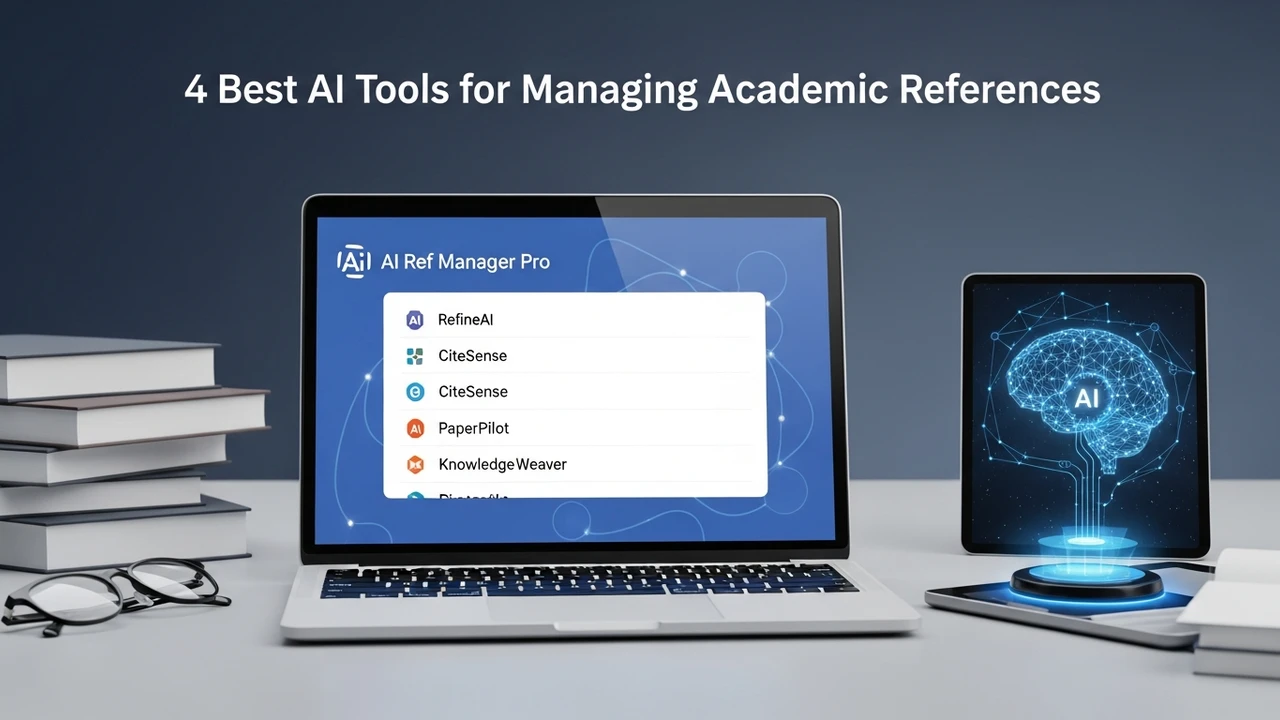
4 Best AI Tools for Managing Academic References
Organize your research papers and citations effortlessly with these 4 best AI tools for academic reference management.
If you have ever spent hours manually typing out citations or hunting for that one PDF you downloaded three months ago, you know the pain of academic research. Managing references is often the most tedious part of writing a thesis or a research paper. Thankfully, the landscape of academic tools has shifted dramatically with the integration of Artificial Intelligence. Today, we are looking at the four best AI-powered tools that take the headache out of bibliography management, allowing you to focus on the actual research rather than the formatting.
Why AI Reference Management Tools Are Essential for Modern Students
In the past, reference management meant using basic software that required manual input for almost every field. Today, AI-driven tools can scrape metadata from PDFs, automatically detect citation styles, and even suggest relevant papers based on your current library. These tools act as a personal research assistant, ensuring that your APA, MLA, or Chicago style citations are perfect every single time. By automating the mundane, you save precious hours that can be better spent on data analysis or drafting your core arguments.
Zotero with ZoteroGPT Integration
Zotero has long been the gold standard for free, open-source reference management. However, with the addition of AI plugins like ZoteroGPT, it has become a powerhouse. This tool allows you to chat with your PDFs. You can ask the AI to summarize a paper, extract key findings, or even help you draft a literature review based on the sources in your collection.
Use Case: Ideal for students who have a massive library of PDFs and need to synthesize information quickly across multiple documents.
Pricing: Zotero is free; the ZoteroGPT plugin is also free, though it may require an OpenAI API key for advanced features.
Mendeley Reference Manager and AI Suggestions
Mendeley is a favorite among STEM students because of its robust social networking features and deep integration with Elsevier databases. Its AI engine analyzes your library and suggests new, relevant papers that you might have missed. It is excellent for keeping up with the latest trends in your specific field of study.
Use Case: Perfect for researchers who need to stay updated with the latest publications in science and technology.
Pricing: Free basic version; premium plans start at around $4.99/month for increased cloud storage.
EndNote 21 and AI-Powered Cite While You Write
EndNote is the heavy hitter of the academic world. It is designed for professionals and PhD students who handle thousands of references. The latest version, EndNote 21, uses AI to help you find full-text articles automatically and ensures that your citations are synced across your desktop, online, and iPad versions.
Use Case: Best for long-term projects like dissertations or books where you need absolute precision and high-volume management.
Pricing: One-time purchase of approximately $250, with student discounts often available.
Paperpile for Google Workspace Integration
If you live in Google Docs, Paperpile is your best friend. It is built specifically for the web and integrates seamlessly with your browser. Its AI features help you import references with a single click from sites like PubMed or Google Scholar, and it handles the formatting in your document in real-time.
Use Case: The go-to choice for students who collaborate on Google Docs and need a lightweight, cloud-native solution.
Pricing: Subscription-based, usually around $2.99/month for students.
Comparing the Top AI Reference Managers
When choosing between these tools, consider your workflow. If you are a heavy Google Docs user, Paperpile is unbeatable. If you are a PhD student dealing with thousands of sources, EndNote is the industry standard. For those who want a free, highly customizable experience, Zotero is the way to go. Mendeley sits in the middle, offering a great balance of social features and database integration. Each of these tools uses AI to reduce the time you spend on manual entry, but they serve slightly different academic needs. Take a moment to test the interface of each, as the best tool is the one that fits naturally into your existing writing process.
:max_bytes(150000):strip_icc()/277019-baked-pork-chops-with-cream-of-mushroom-soup-DDMFS-beauty-4x3-BG-7505-5762b731cf30447d9cbbbbbf387beafa.jpg)