4 Best AI Tools for Preparing for Standardized Tests
Get ready for the SAT, GRE, or GMAT with these 4 best AI tools that provide personalized practice questions and feedback.
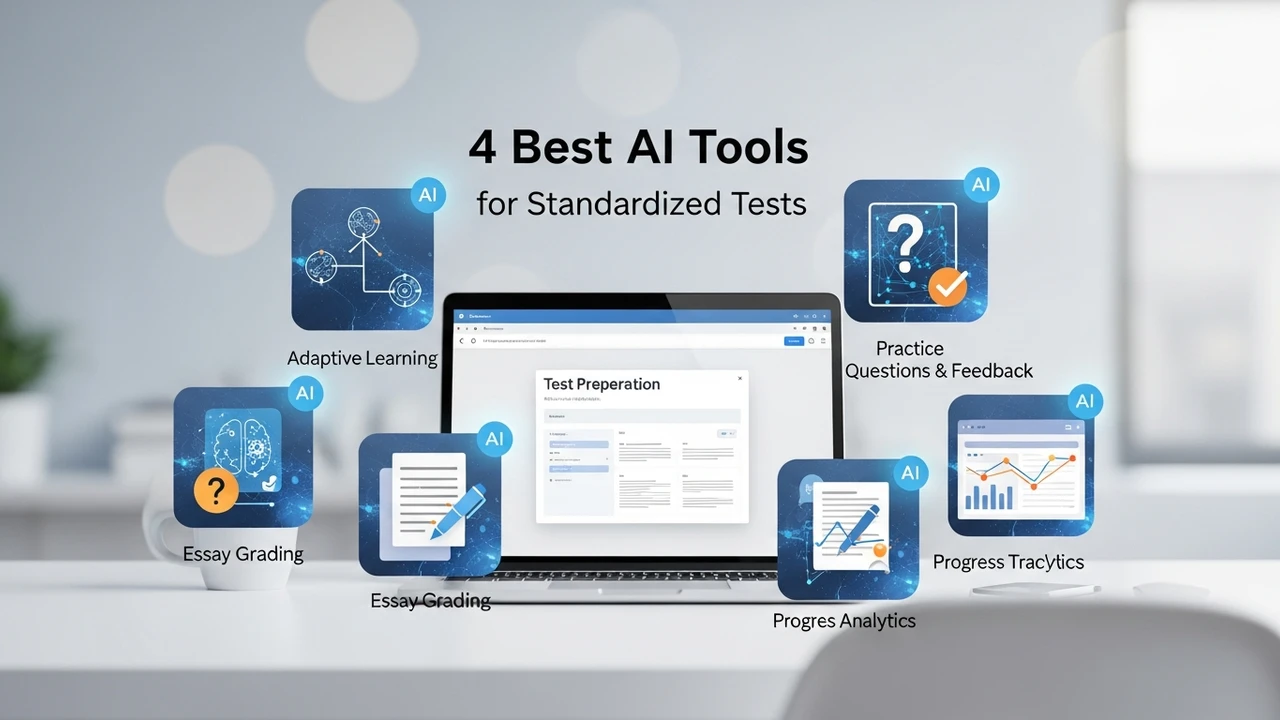
4 Best AI Tools for Preparing for Standardized Tests
Get ready for the SAT, GRE, or GMAT with these 4 best AI tools that provide personalized practice questions and feedback.
Let’s be real—studying for standardized tests like the SAT, GRE, or GMAT is usually a total nightmare. You’re staring at massive prep books, drowning in practice exams, and trying to figure out why you keep getting that one geometry question wrong. But here is the good news: AI has completely changed the game. Instead of just grinding through generic questions, you can now use smart platforms that actually learn your weaknesses and push you exactly where you need to improve. If you are looking to boost your score without losing your mind, these four AI-powered tools are absolute lifesavers.
Personalized AI Learning Paths for SAT and GRE Success
The biggest advantage of using AI for test prep is the ability to create a custom study plan. Traditional prep courses treat everyone the same, but AI platforms like Khan Academy (with its AI-driven SAT prep) or specialized tools like Magoosh and PrepScholar use algorithms to track your performance. If you struggle with reading comprehension but crush the math section, the AI will automatically adjust your daily tasks to focus on your reading speed and vocabulary. It’s like having a private tutor who never gets tired and knows exactly what you need to study next.
Top 4 AI Tools for Standardized Test Preparation
When it comes to choosing the right software, you want something that offers high-quality practice questions and detailed explanations. Here are the top contenders:
1. Magoosh
Magoosh is a fan favorite for a reason. It uses a sophisticated algorithm to predict your score based on your practice performance. It offers thousands of questions that mimic the actual test format. The best part? Every single question comes with a video explanation. If you get a question wrong, you don’t just see the right answer; you watch a teacher explain the logic behind it. Pricing is very competitive, usually starting around $100 to $150 for a multi-month subscription, making it much cheaper than a human tutor.
2. PrepScholar
PrepScholar is all about data. Their AI engine analyzes your strengths and weaknesses down to the specific sub-topic level. If you are bad at 'linear equations' specifically, it won't just give you more math; it will give you targeted drills on linear equations until you master them. It’s a bit more expensive, often ranging from $300 to $800 depending on the package, but the level of customization is unmatched.
3. Khan Academy Official Digital SAT Prep
If you are on a budget, this is the gold standard. Partnered with the College Board, their AI-driven platform is completely free. It uses official test questions and provides a personalized study plan that syncs with your PSAT scores. While it might not have the advanced analytics of paid tools, it is the most reliable source for SAT prep available today.
4. Kaplan AI-Powered Qbank
Kaplan has been in the game forever, and their AI Qbank is a beast. It’s designed for high-stakes exams like the GMAT and GRE. It allows you to build custom quizzes based on difficulty, topic, and time constraints. It’s perfect for students who want to simulate the pressure of the actual exam. Prices vary widely, but expect to pay between $200 and $500 for comprehensive access.
Comparing AI Test Prep Features and Pricing
When you compare these tools, think about your specific needs. If you need a structured, guided experience, Magoosh is your best bet. If you are a data-driven learner who wants to drill specific weaknesses, PrepScholar is worth the investment. For those just starting out or watching their wallet, Khan Academy is unbeatable. Kaplan is the go-to for students who need a professional-grade simulation for graduate-level exams like the GMAT.
How to Use AI Tools for Maximum Score Improvement
Don't just log in and click buttons. To get the most out of these tools, you need to be consistent. Use the AI to identify your 'blind spots' in the first week. Spend 80% of your time on the topics the AI flags as 'weak' and only 20% on what you are already good at. Most of these platforms offer mobile apps, so use your commute or downtime to knock out a few practice questions. The key is the feedback loop—every time you get a question wrong, read the explanation, understand the mistake, and let the AI guide your next practice session. You will be surprised at how quickly your score climbs when you stop guessing and start learning from your data.
:max_bytes(150000):strip_icc()/277019-baked-pork-chops-with-cream-of-mushroom-soup-DDMFS-beauty-4x3-BG-7505-5762b731cf30447d9cbbbbbf387beafa.jpg)